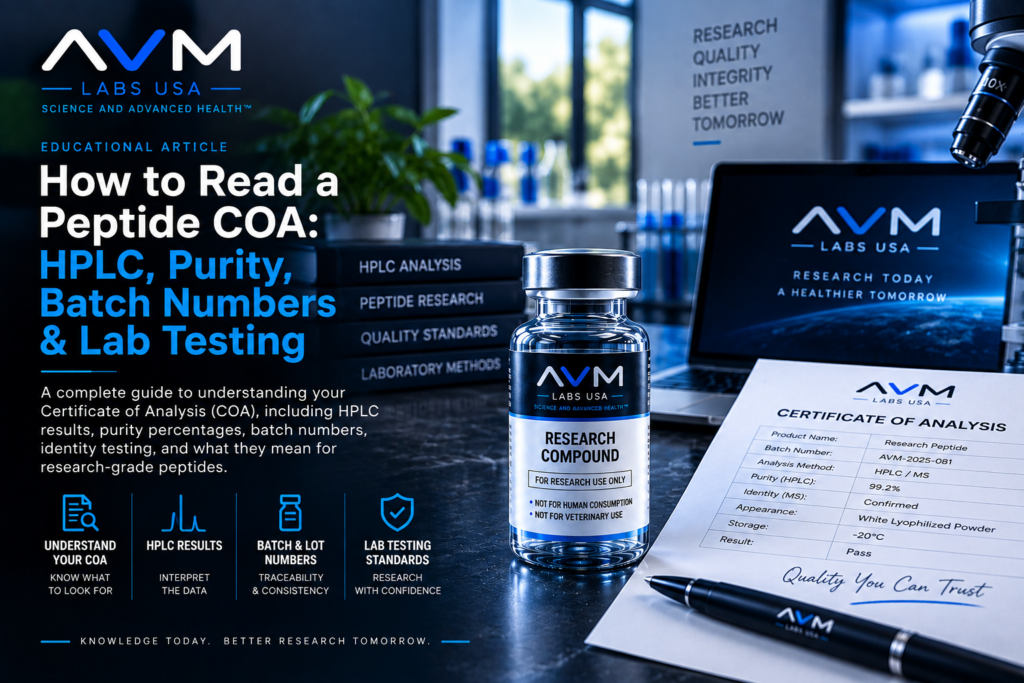
A Certificate of Analysis (COA) provides important analytical information about a research peptide, but understanding the document requires more than looking at a single purity percentage. HPLC results, batch and lot numbers, testing methods, sample identification, and laboratory information can all provide valuable context. In this guide, we explain how to read a peptide COA and what researchers should look for when reviewing analytical documentation.
What Is a Peptide Certificate of Analysis (COA)?
A Certificate of Analysis (COA) is a document that summarizes analytical testing information for a specific sample or batch. For research peptides, a COA may include the product or sample name, batch or lot number, testing date, analytical methods, purity results, identity information, and laboratory details. Reviewing these elements together can help researchers better understand the analytical documentation associated with the material.
How to Read HPLC Results on a Peptide COA
HPLC, or High-Performance Liquid Chromatography, is commonly used to separate and analyze components within a sample. On a peptide COA, HPLC results may include a chromatogram with peaks, retention times, and a reported purity percentage. The main peak generally represents the predominant component detected under the test conditions, while smaller peaks may represent other detectable components. Researchers should review the chromatogram and testing information together rather than relying only on the reported purity percentage.
What Does the Purity Percentage Mean?
The purity percentage reported on a peptide COA generally reflects the relative proportion of the main component detected by the analytical method used. For example, an HPLC purity result describes the chromatographic purity observed under specific testing conditions. It should not automatically be interpreted as confirmation of identity, quantity, or every possible impurity. For this reason, researchers should evaluate the purity result together with the complete analytical data provided on the COA.
Why Batch and Lot Numbers Matter on a COA
Batch and lot numbers help connect a research material with its associated analytical documentation. When reviewing a COA, researchers should compare the batch or lot identifier on the document with the identifier provided for the specific material being evaluated. A matching identifier helps establish traceability between the sample and its test results, while a mismatch may indicate that the COA corresponds to a different batch.
Identity Testing vs. Purity Testing
Identity testing and purity testing provide different types of analytical information. Purity testing, commonly performed using HPLC, evaluates the relative composition of a sample under specific test conditions. Identity testing is used to help confirm whether the analyzed compound corresponds to the expected substance. Because these tests answer different questions, researchers should consider both identity and purity data when evaluating a peptide COA.
What Laboratory Information Should a COA Include?
A well-documented COA should clearly identify the laboratory or testing provider responsible for the analysis and provide relevant information about the tests performed. Researchers may also look for the testing date, sample or batch identification, analytical methods, reported results, and supporting data when available. Clear laboratory information and traceable documentation make it easier to understand where the analytical results came from and which sample they represent.
How to Verify That a COA Matches the Research Material
To verify that a COA corresponds to a specific research material, compare the product or sample name and the batch or lot number shown on the COA with the identifying information associated with the material. Researchers should also review the testing date, analytical methods, and laboratory information for additional context. Matching identifiers provide an important link between the analytical results and the specific batch being evaluated.
Red Flags to Look for When Reviewing a Peptide COA.
When reviewing a peptide COA, certain details may indicate that the documentation deserves closer examination. Researchers should evaluate whether the document provides enough information to connect the analytical results to a specific sample or batch and whether the testing information is clearly presented.
- Missing or unclear batch or lot identification
- No testing date or laboratory information
- Purity results without supporting analytical data
- Product or sample information that does not match the material
- Unclear identification of the analytical method used
- Documentation that cannot be connected to a specific tested batch
Why Transparent COA Documentation Matters in Peptide Research
Transparent COA documentation allows researchers to evaluate analytical information with greater context and traceability. Access to batch-specific results, testing methods, laboratory information, and supporting analytical data makes it easier to understand how a research material was evaluated. Clear documentation also helps researchers compare batches and identify whether the available testing information corresponds to the specific material being reviewed.
Frequently Asked Questions About Peptide COAs
What Is the Difference Between a COA and an HPLC Report?
A Certificate of Analysis (COA) is a document that summarizes analytical information associated with a specific sample or batch. An HPLC report focuses specifically on chromatographic analysis and may include a chromatogram, retention times, peak information, and a reported purity result. A COA may include HPLC results along with other analytical and sample information.
What Information Should Researchers Look for on a Peptide COA?
Researchers should look for clear sample or product identification, a batch or lot number, testing date, laboratory information, analytical methods, reported results, and supporting data such as chromatograms when available. These details help researchers determine whether the COA corresponds to the specific research material being evaluated.
Does a High HPLC Purity Percentage Confirm Peptide Identity?
No. A high HPLC purity percentage describes the relative chromatographic purity observed under the specific test conditions, but it does not by itself confirm the identity of the compound. Identity testing and purity testing answer different analytical questions, so researchers should review both types of information when available.
Why Are Batch and Lot Numbers Important on a Peptide COA?
Batch and lot numbers help connect a specific research material with its associated analytical documentation. When the identifier on the COA matches the identifier associated with the material, researchers can more confidently determine which analytical results correspond to that specific batch. This traceability is an important part of evaluating research documentation.
Understanding Peptide Testing and COA Documentation
Understanding peptide testing and COA documentation helps researchers evaluate research materials with greater context and transparency. Purity percentages, HPLC results, identity testing, batch information, and laboratory documentation should be reviewed together rather than individually. By understanding how these elements relate to one another, researchers can make more informed decisions when reviewing analytical documentation for peptide research.