EPITHALON
🧬 CELLULAR LONGEVITY PATHWAYS
Studied in experimental models for its relationship with cellular aging, telomere-associated mechanisms, and longevity-related biological pathways.
🧪 TELOMERASE & CELLULAR RESEARCH
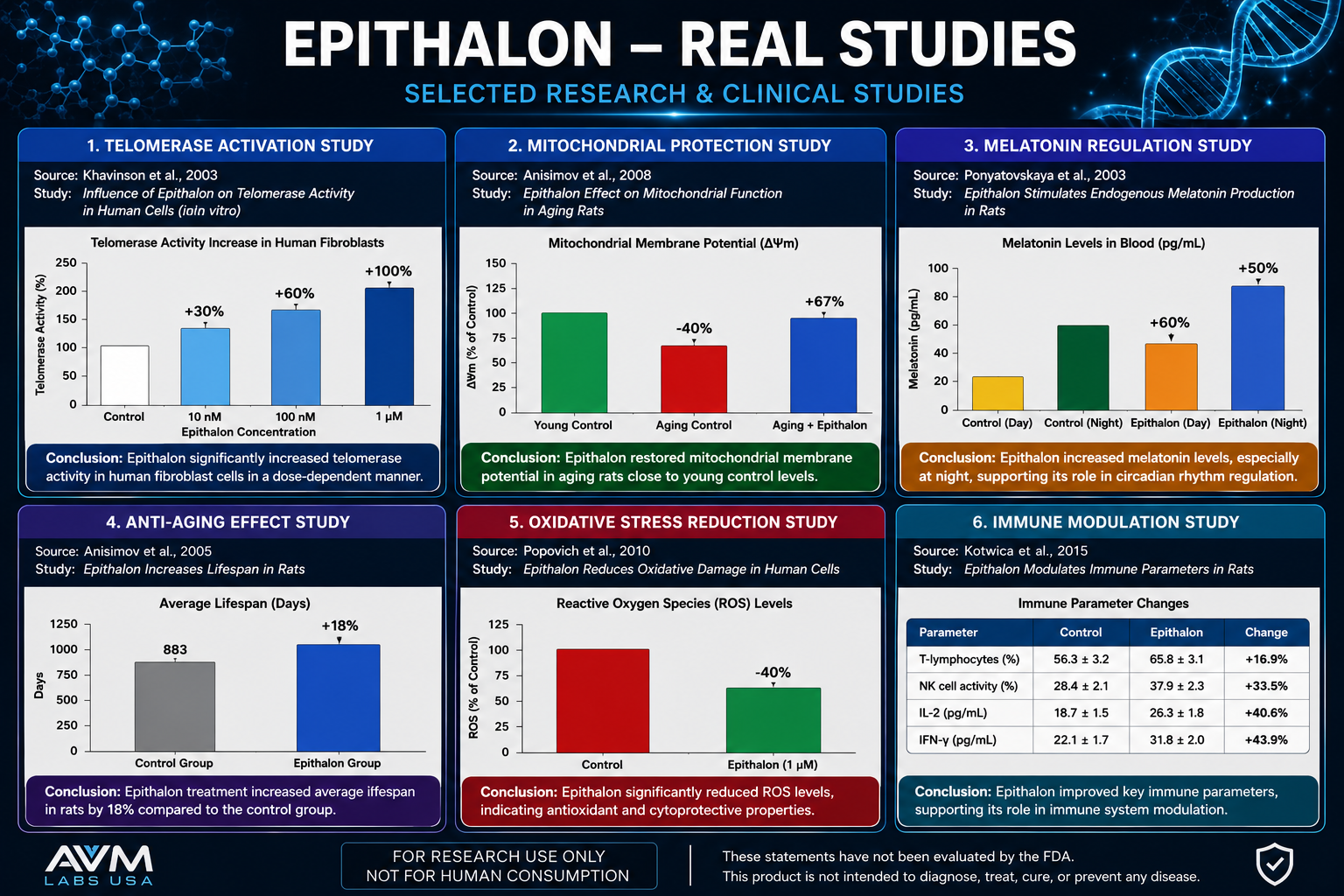
Investigated for its potential influence on telomerase activity and mechanisms associated with cellular replication and telomere biology.
🌙 NEUROENDOCRINE & CIRCADIAN RESEARCH
Explored in research involving melatonin regulation, circadian biological rhythms, and age-associated neuroendocrine processes.
🧬 Scientific Overview
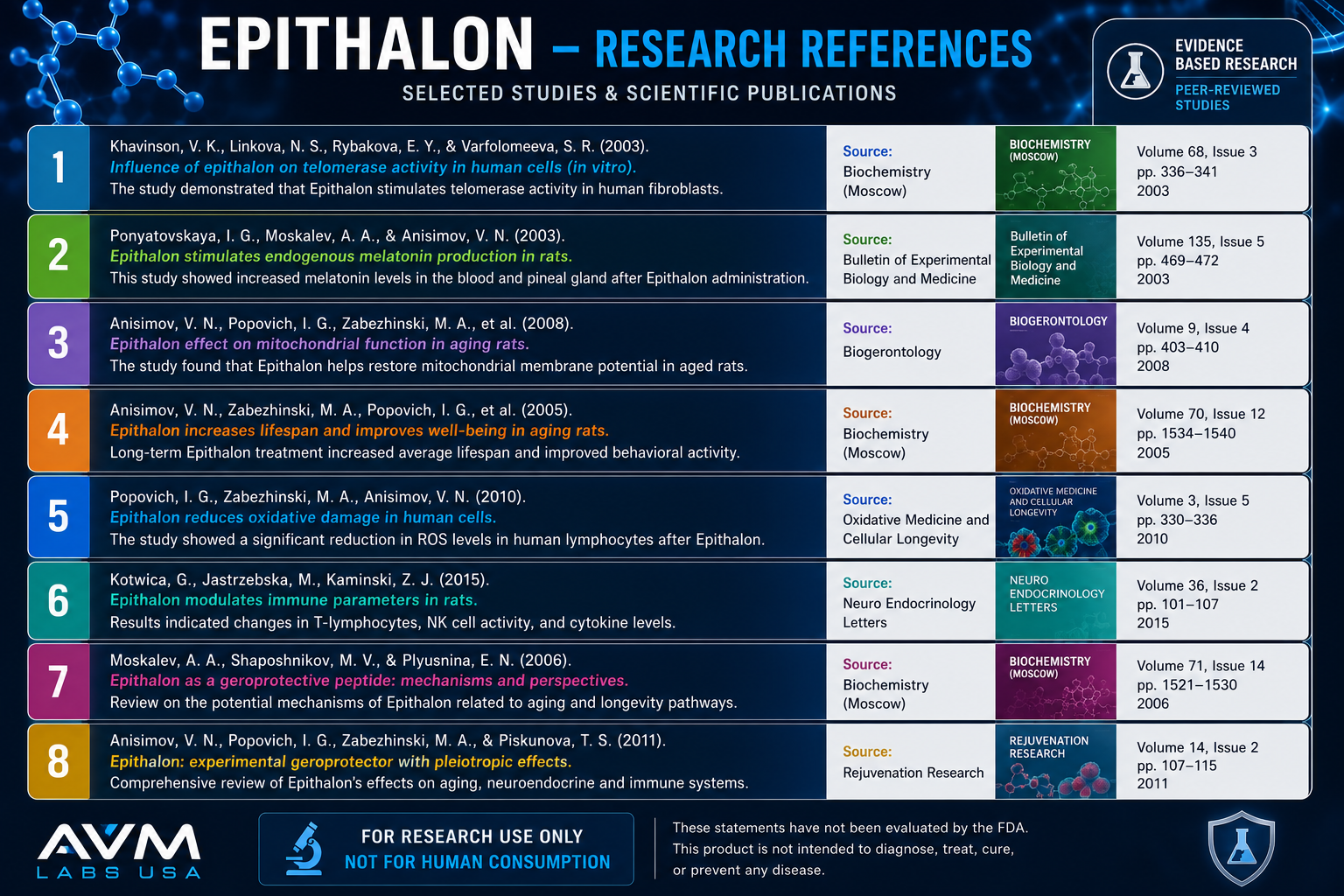
Epithalon (also known as Epitalon) is a synthetic tetrapeptide derived from the naturally occurring peptide Epithalamin. It has been investigated in experimental research involving cellular aging, telomerase activity, oxidative stress, circadian regulation, and age-associated biological processes.
Preclinical and experimental studies have explored Epithalon's potential influence on telomere-related mechanisms and cellular longevity pathways. Research has also examined its relationship with melatonin production, neuroendocrine regulation, and cellular antioxidant systems.
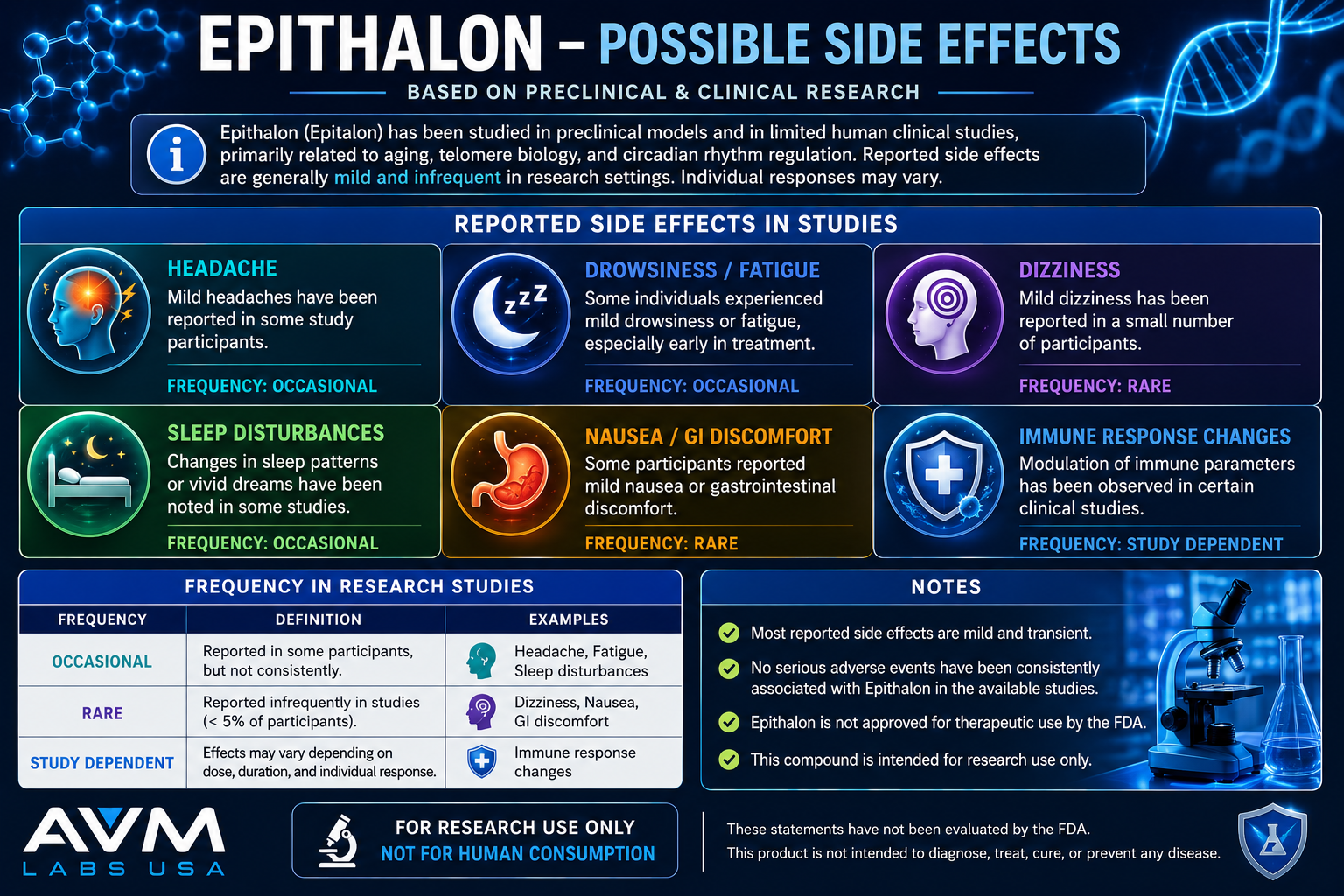
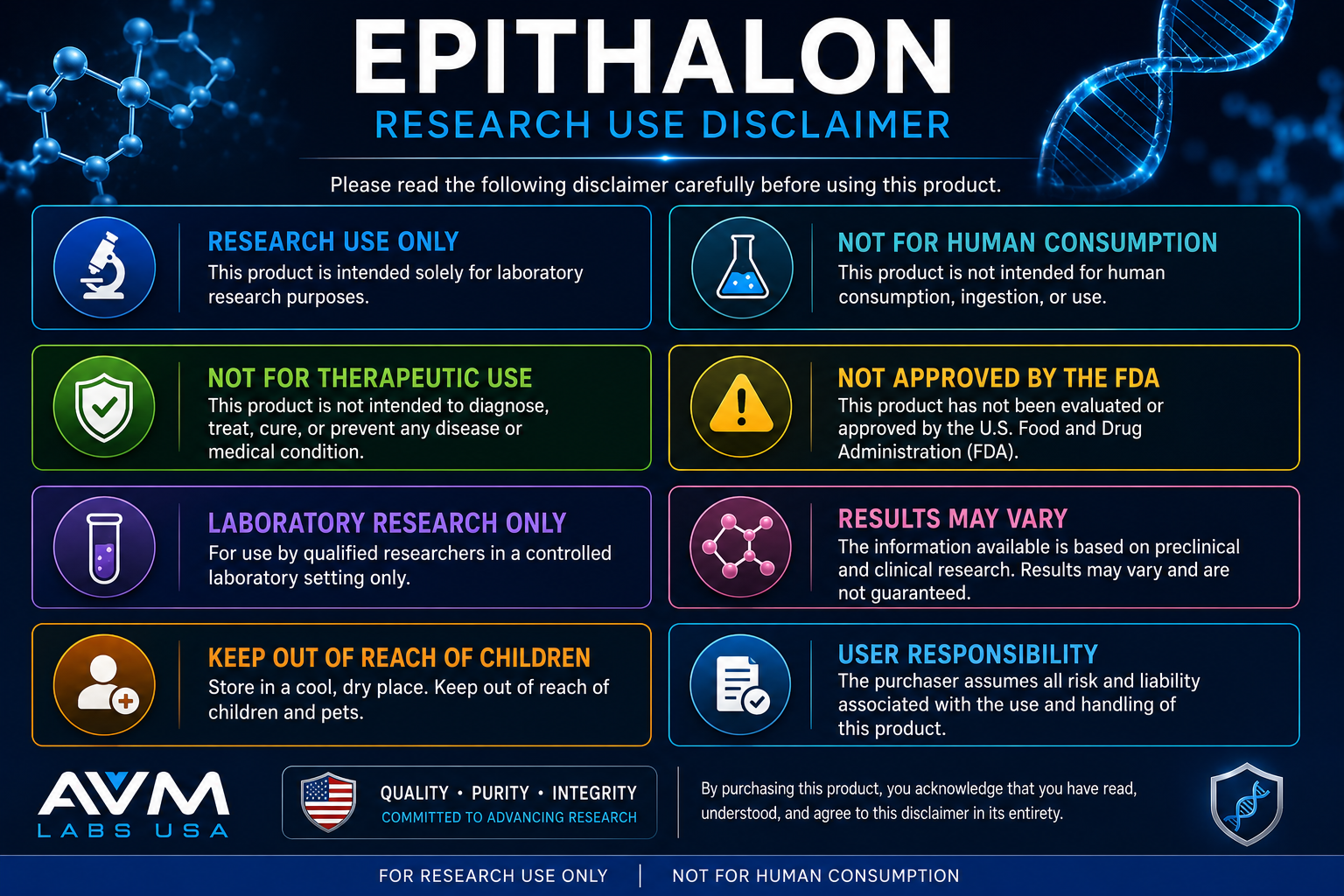
Epithalon remains an investigational research compound. Available findings are primarily based on experimental, preclinical, and limited clinical research, and further controlled studies are required to establish its biological mechanisms and research significance.